The term “Molecular Gastronomy” was coined in 1988 by Hungarian physicist “Nicholas Kurti” and French chemist “Hervé This” (Father of molecular gastronomy).
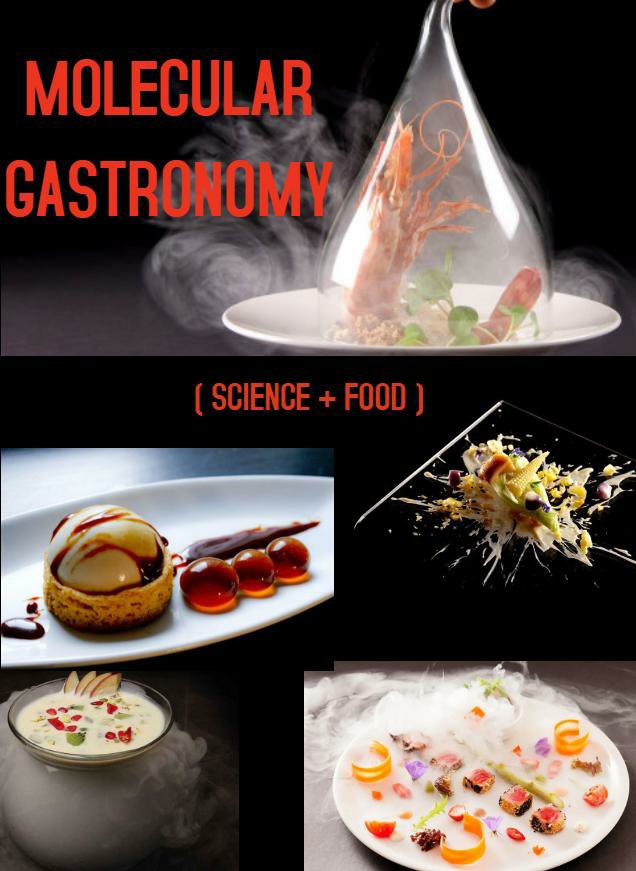
MOLECULAR GASTRONOMY can be defined as the fusion of food, science and culinary arts. New technologies and natural texturing agents can now be used to deconstruct any dishes and cocktails.
TECHNIQUES:
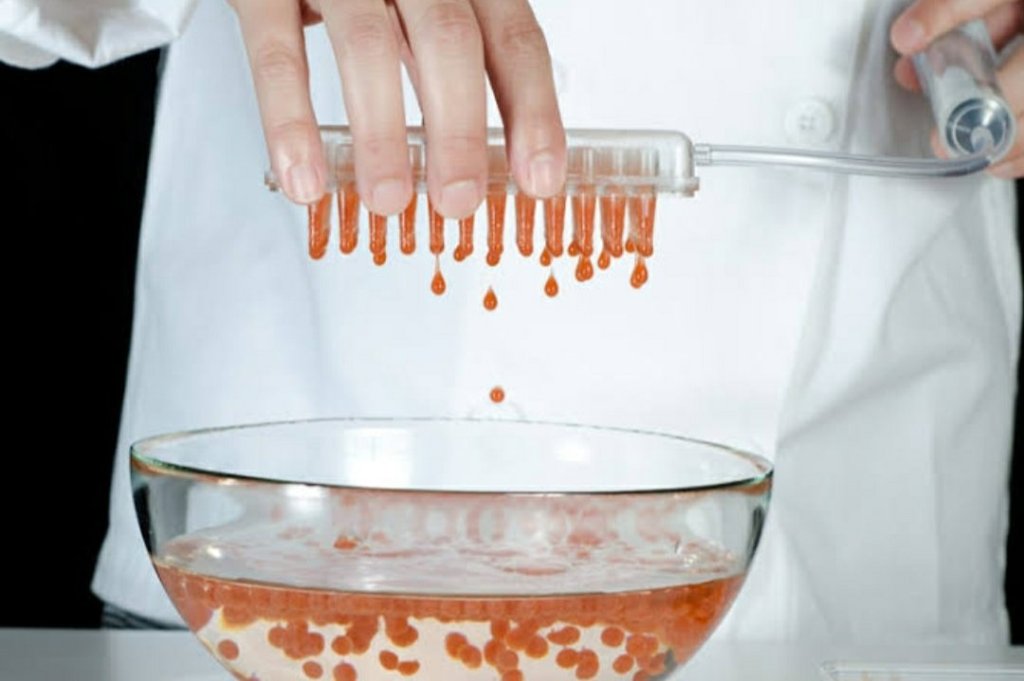
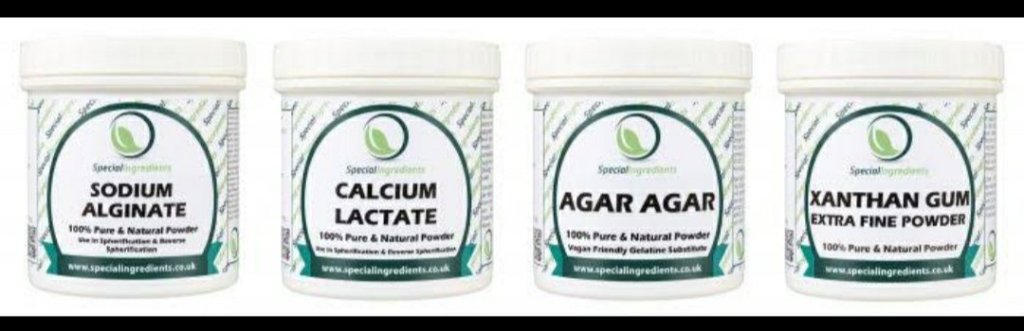
1. SPHERIFICATION – It is the culinary process of shaping a liquid into spheres of liquid held by a thin gel membrane which visually and texturally resemble caviar.
Additives involved: Sodium Alginate, Calcium Salts
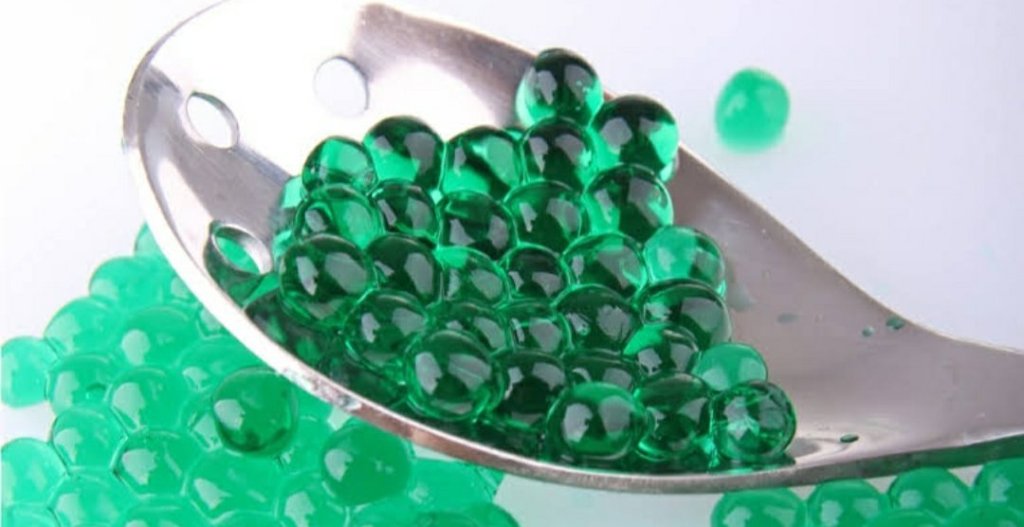
2. GELIFICATION – It is the process of turning a liquid into gel which is a solid, jelly-like material that can have properties ranging from soft and weak to hard and tough.
Additives involved: Agar Agar, Carrageenan, Gelatin and Gellan gum
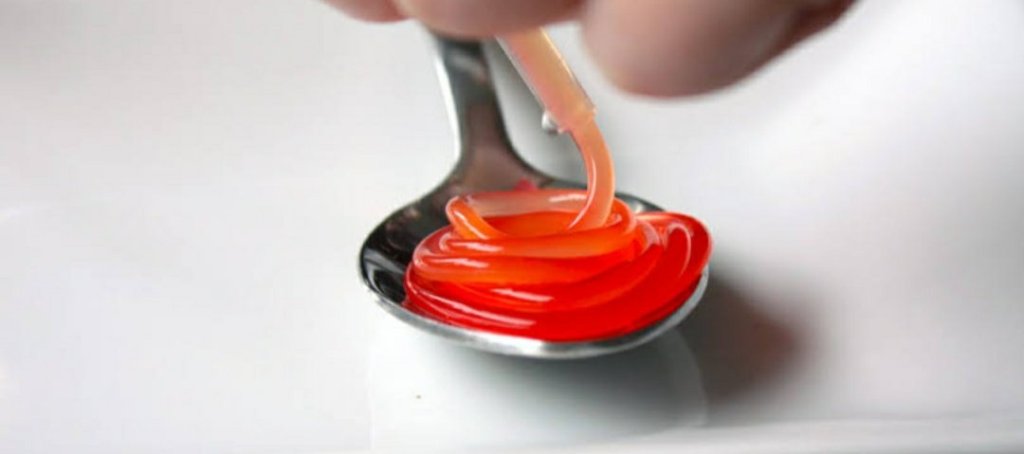
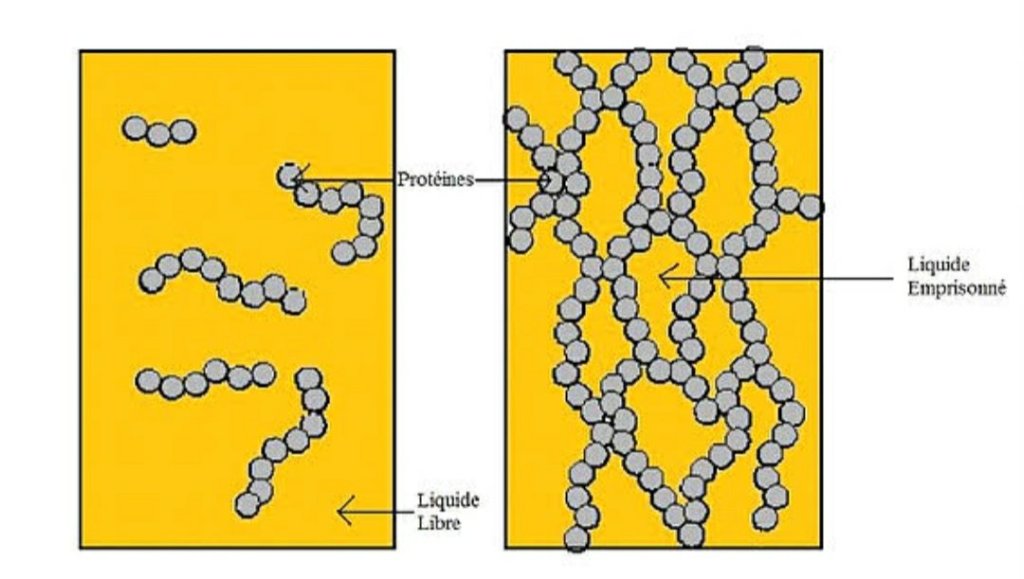
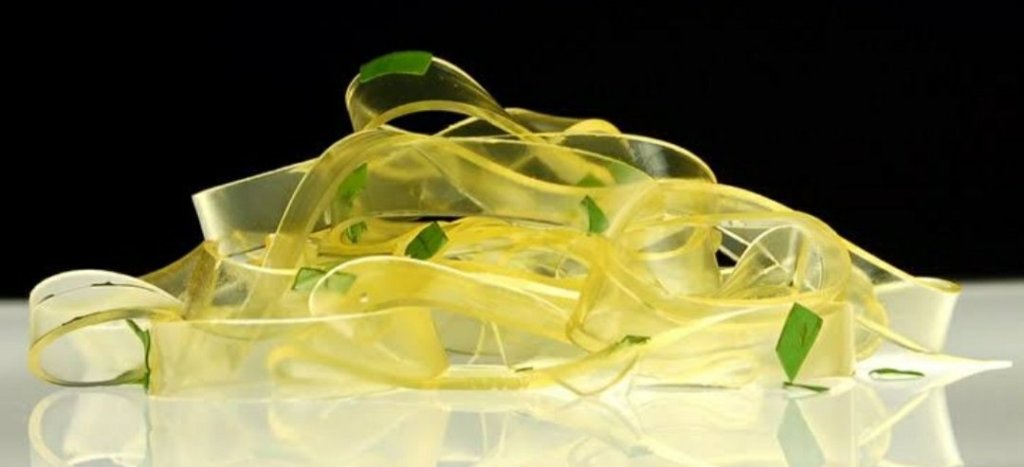
3. THICKENING – It is the process of increasing the viscosity of a solution or liquid/solid mixture without substantially modifying its other properties.
Additives involved: Xanthan gum
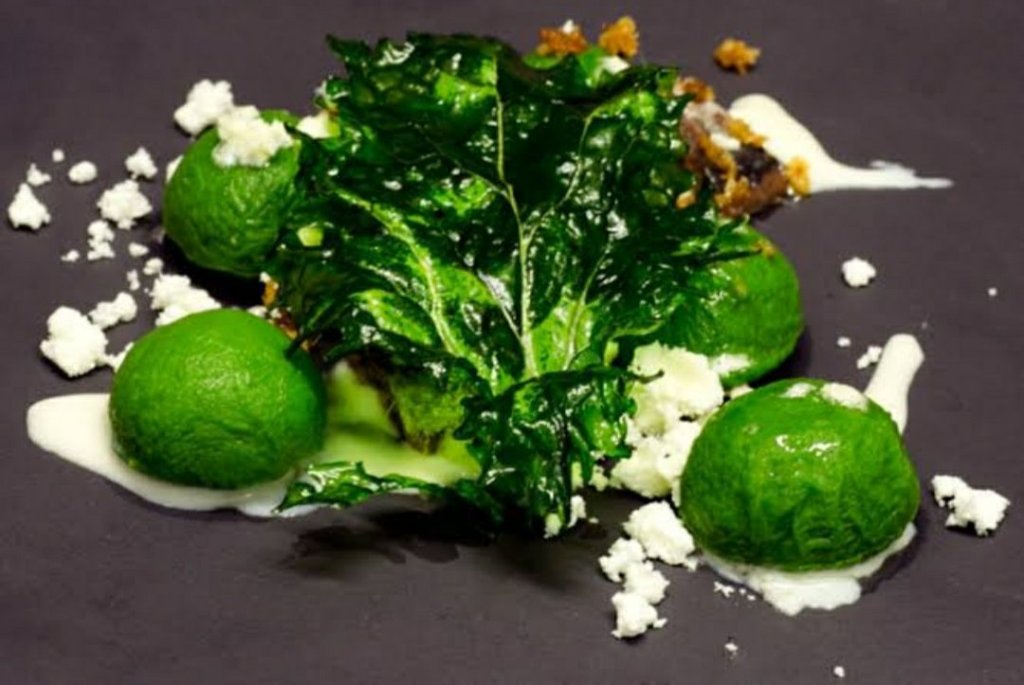
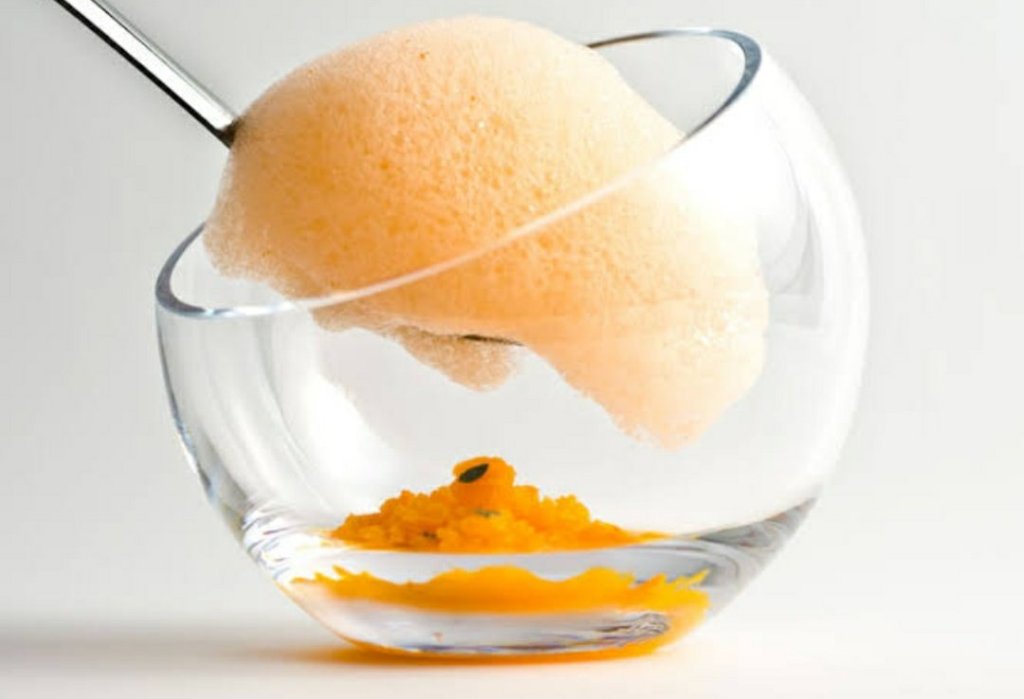
4. EMULSIFICATION – It is the process of turning a liquid into a light air foam.
Additives involved: Soy Lecithin
5. EFFERVESCENCE – It is the escape of gas from another body and the foaming or fizzing that results from the release of the gas. An everyday example is seen in carbonated beverages such as soft drinks.
Additives involved: Popping sugar
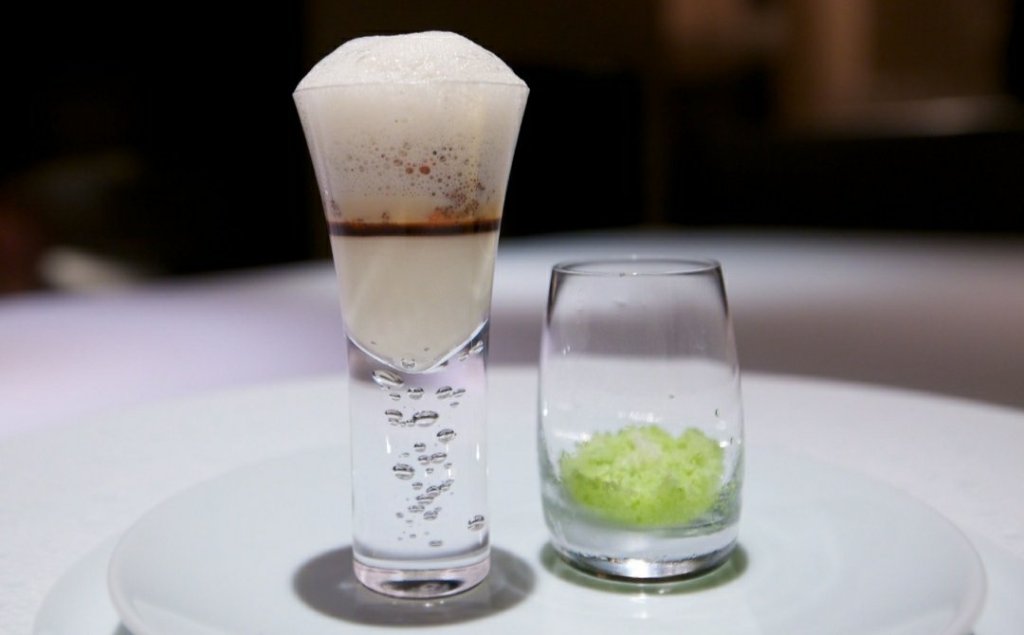
6. TRANSFORMATION – There are different kind of transformation.
- Maltodextrin is a sugar that will turn any fatty liquid such as oil, bacon fat or melted chocolate into powder.
- Transglutaminase is an enzyme often reffered to as “meat glue” that will bind food rich in proteins.
Additives involved: Maltodextrin and Transglutaminase
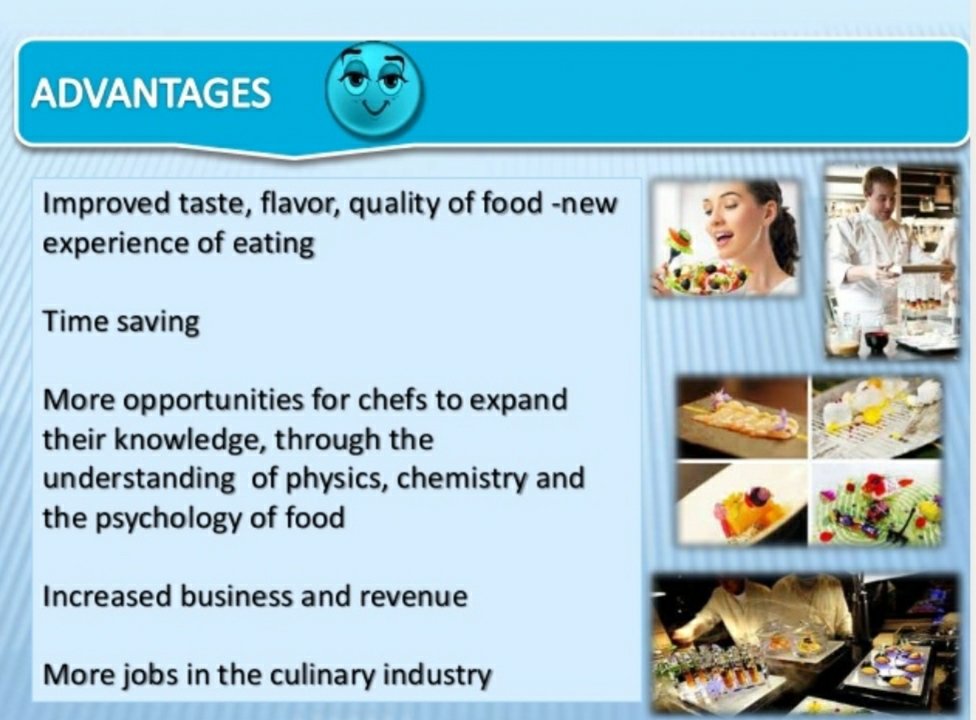
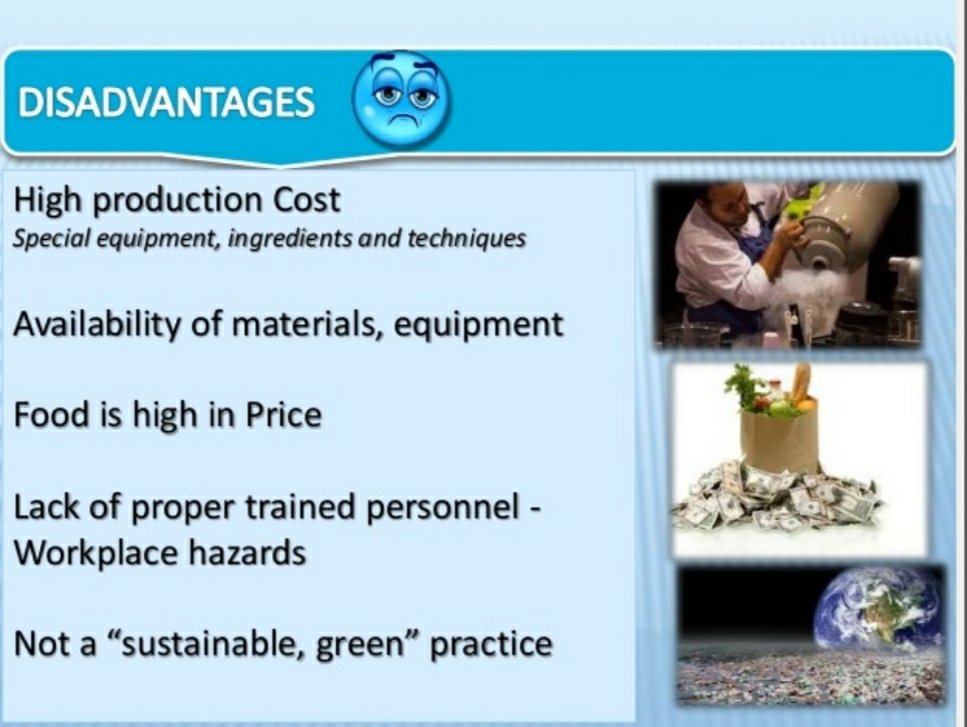
ADVANTAGES AND DISADVANTAGES
TOOLS
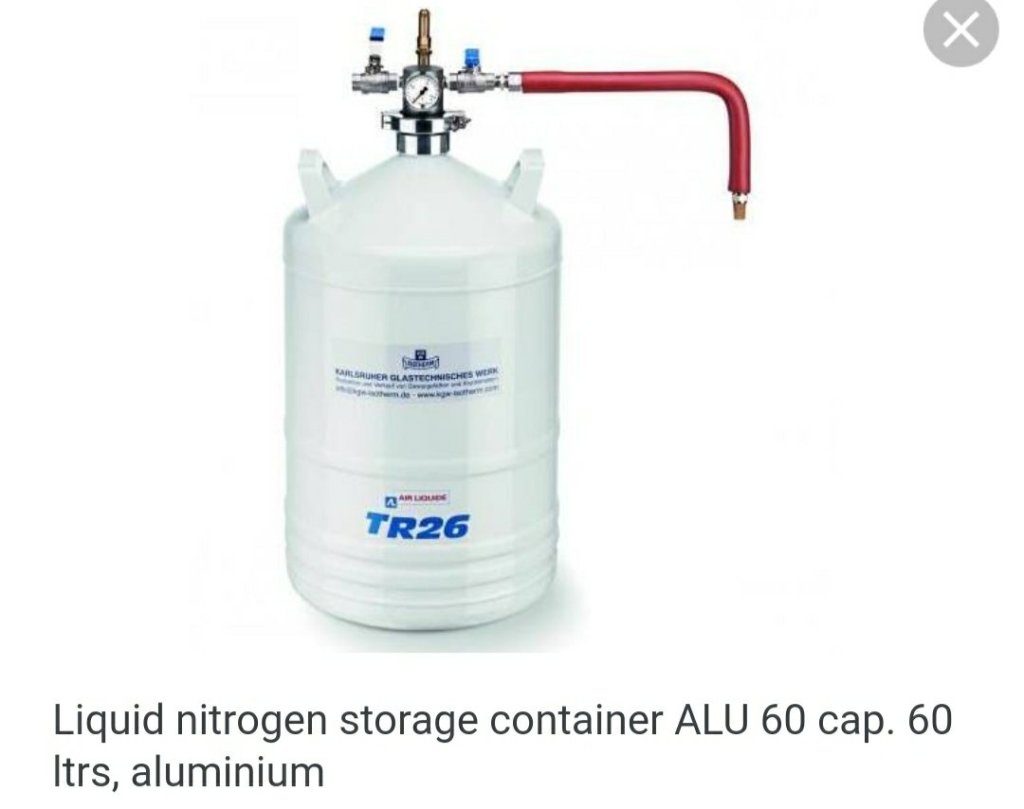
- Liquid nitrogen, for flash freezing without allowing the formation of large ice crystals. Also used for freezing and shattering
- Anti-griddle (chilled metal top), for cooling and freezing
- Well controlled water baths for low temperature cooking
- Food dehydrator
- Centrifuge
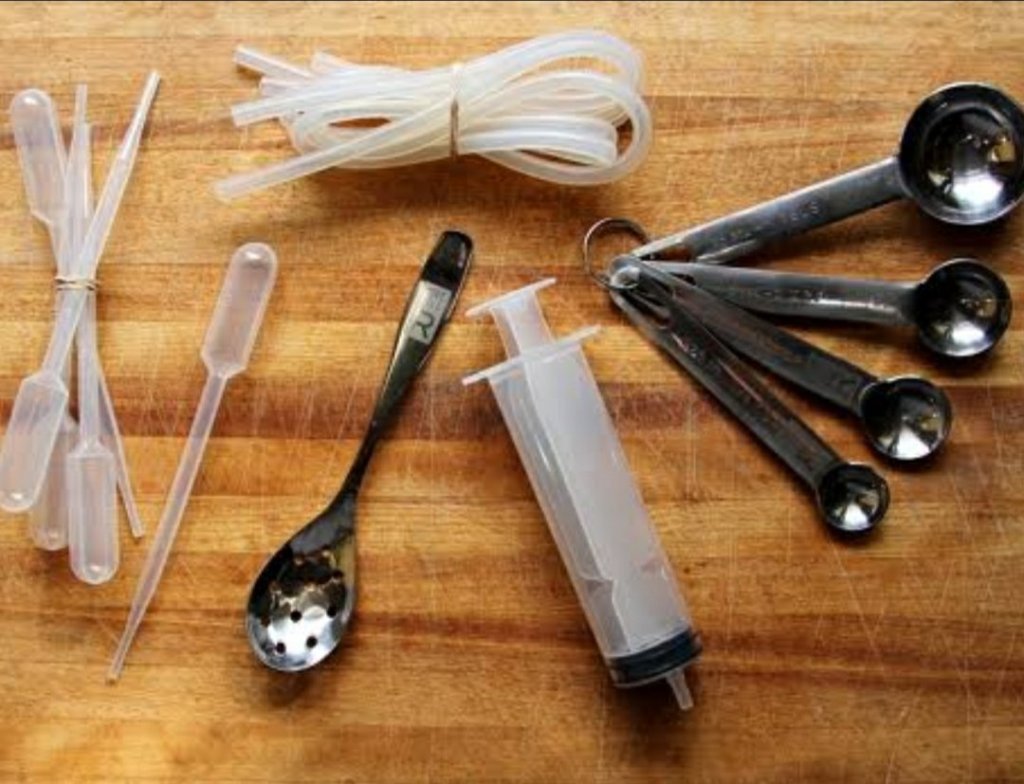
- Syringe, for injecting unexpected fillings
- Ultrasound
- Vacuum machine
- Pressure cookers
- pH meters
- Tabletop distilleries
INGREDIENTS
- Gelling agents like methylcellulose
- Sugar substitutes
- Emulsifiers like soy lecithin and xanthan gum
- Non-stick agents
- Enzymes, for example transglutaminase – a protein binder, also called meat glue
- Carbon dioxide, for adding bubbles and making foams
- Hydrocolloids, such as starch, gelatin, pectin and natural gums – used as thickening agents, gelling agents, emulsifying agents and stabilizers, sometimes needed for foams
 dead soul